Extremism and radicalisation are phenomena that shape the societal challenges facing Germany and many other countries in Europe and beyond.
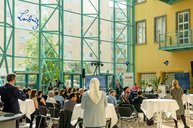
The RADIS research network, in which over one hundred researchers from a total of twelve research projects funded by the BMBF's ‘Social Causes and Effects of Radical Islam in Germany and Europe’ programme work and conduct research together, addresses the complexities of radicalisation, extremism, prevention and political education, particularly with regard to the phenomenon of Islamism. With the public conference on 19 May in Berlin, we offered civil society, governmental and political actors a forum for discussion to gather insights together with the research network, but also to discuss how extremism and radicalisation phenomena can be meaningfully countered.
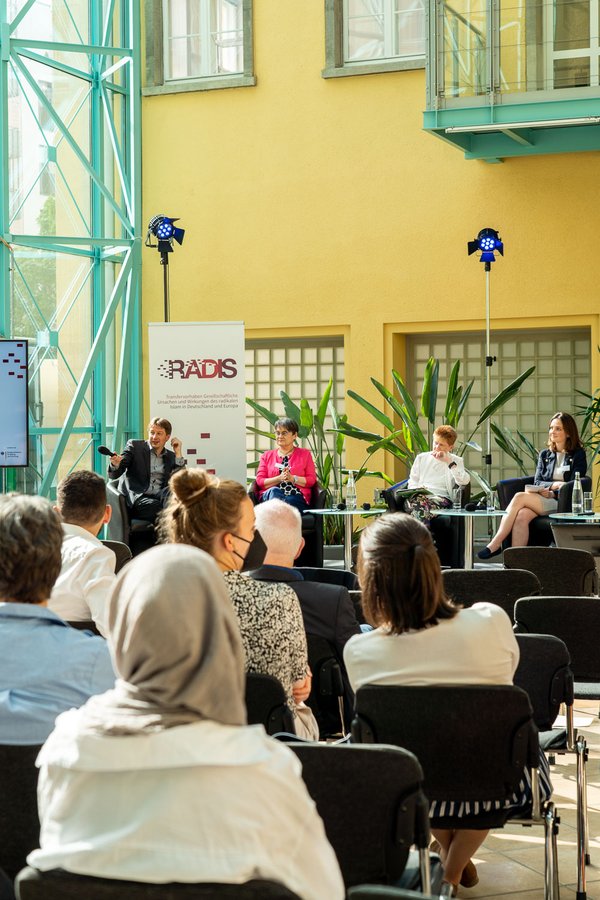
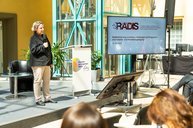
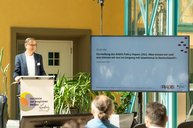
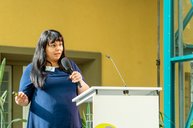
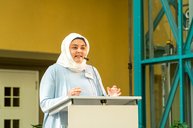
The conference focused on the RADIS policy paper ‘Thinking comprehensively about radicalisation prevention, strengthening civil society, consolidating research structures,’ in which the network's researchers compiled recommendations and options for action. According to Andreas Zick (RADIS), ‘society may be becoming smarter at recognising extremism and radicalisation, but it is not necessarily becoming smarter at rejecting them. The panellists and the approximately 100 participants agreed that extremism prevention must be considered comprehensively and as a cross-cutting task for society as a whole; after all, ‘democracy itself must be understood as structural prevention,’ as Susanne Pickel (Project RIRA) emphasised. Incorporating findings from basic research into the democratic process remains a challenge. Petra Pau, Vice-President of the German Bundestag, noted that social science findings in particular do not always find their way into political processes. Cäcilia Hermes from the office of Serap Güler, Member of the German Bundestag, emphasised the relevance of the event for the transfer of knowledge through dialogue, as research results should not only be ‘accessible, but also channelled in such a way that they reach decision-makers’.
- - - - - - - - -
Initial insights into ongoing research were discussed in short presentations in the second part of the conference: Liriam Sponholz (RaMi project) showed when and how the topics of Islam and Muslims are discussed in the European press; Gerrit Hirschfeld (OKAI project) spoke about crisis communication by Muslim organisations after terrorist attacks; Fatma Aydinli (Project Interdependencies) presented a Bavarian case study on the perception and acceptance of Islamic religious education among Muslim parents.
- - - - - - -
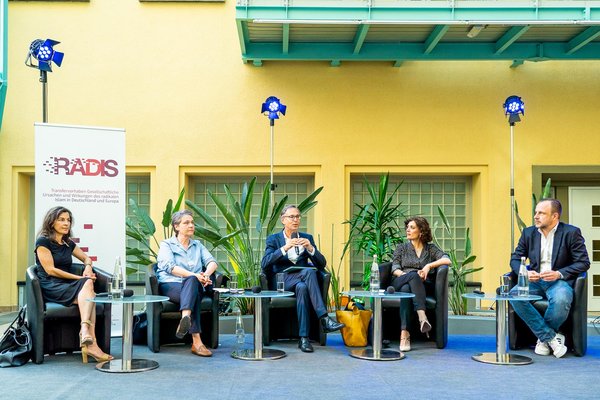
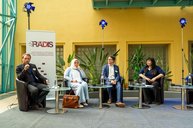
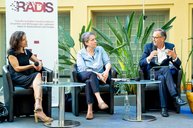
After a reception, the evening panel discussion also focused on the conditions for good research, picking up on a thread from the afternoon debate. Yasemin El-Menouar (Bertelsmann Foundation), Naika Foroutan (Humboldt University of Berlin, BIM / DeZIM), Judy Korn (Violence Prevention Network) and Peter Neumann (King's College London) raised many interesting challenges, ranging from questions of academic freedom, for example in relation to the handling of data sets, to the structural conditions of local and municipal prevention and education work, and the conditions and opportunities for successful knowledge transfer between different actors from practice, politics and research. It was also self-critically noted that the sometimes narrow focus on radicalisation processes does not always do justice to the diversity of Muslim life in Germany.
As a kick-off and successful contribution to exchange and networking between academia, the prevention landscape, politics and authorities, the conference was a complete success. Despite all the digital possibilities, personal conversation remains the most inspiring format.